Reduce Plastic in Practice!
Reduce Plastic this July!
We’re half way through Plastic-Free July and want to share some tried and tested tips and tricks to help you reduce plastic in practice.
 Why Reduce Plastic?
As veterinary professionals, we stand at the intersection of animal, human and environmental health with a crucial role in sustainability. The business case is clear: more than 50% of pet owners would pay more for services at environmentally responsible clinics, and 76% of veterinary staff feel it's very important their workplace is environmentally sustainable.
And, we know that plastic pollution directly threatens the animals we care for while accelerating climate change.
 Plastic's Threat
Over 99% of plastic is made from fossil fuels, making it a hidden driver of greenhouse gas emissions and therefore climate change. Plastic is currently responsible for 4.5% of global emissions and is projected to reach 21-31% of the global carbon budget by 2050.
Millions of animals die annually from plastic ingestion - from elephants and sea turtles, to cattle and our beloved pets. Microplastics also infiltrate pets' internal tissues while toxic chemicals from plastic toys and packaging disrupt reproductive and endocrine systems.
As veterinary professionals, with every plastic-free choice in our practice we simultaneously protect animal health and take climate action.
It's hard - but we can lead change
Veterinary practices face unique challenges reducing plastic use. Medical-grade plastics ensure sterility and safety - critical for patient welfare and infection control. Single-use items like syringes and gloves prevent cross-contamination, making wholesale elimination neither practical nor safe.
However, as highly trusted community voices, veterinary professionals can drive systemic change. By demonstrating sustainable practices where clinically appropriate, we influence suppliers to develop better alternatives and show clients that environmental stewardship is compatible with excellent care.
As veterinary professionals, we can lead by example while maintaining our commitment to animal health, proving sustainability and quality care are mutually reinforcing.
Easy changes to start today
1. BYO Cups & Bottles: Bring reusable coffee cups and water bottles to work

Why: A typicalone-litre plastic bottle uses about two litres of water during production, and requires 250ML of oil to produce, and a takeaway coffee cup is lined with a thin layer of polyethylene (PE) plastic or polylactic acid (PLA) bioplastic to prevent liquid from seeping through, with plastic lids made from polypropylene or polystyrene.
Given that Australians throw out 2.7 million single-use or disposable coffee cups every single day and 1 million water bottles are discarded, this is a mind-boggling amount of plastic (and water) waste.
Want to go bigger? Get a coffee machine that uses ground coffee beans (rather than pods)
And, consider installing a water filtration system that draws from existing tap water sources and produces distilled water for clinical use.
2. Swap Single-Use Items: Replace plastic utensils, cutlery and crockery with ceramic, glass, bamboo, metal and wood alternatives
How: Invest in glass containers and metal bowls for food storage. Check op shops and Buy Nothing groups for budget-friendly options. Or encourage staff to bring in disused mugs, glasses and utensils for the staff kitchen!
Provide tea pots and cosies (great finds at op shops) or individual tea strainers, Buy tea as loose leaf (and avoid the plastic in tea-bags)
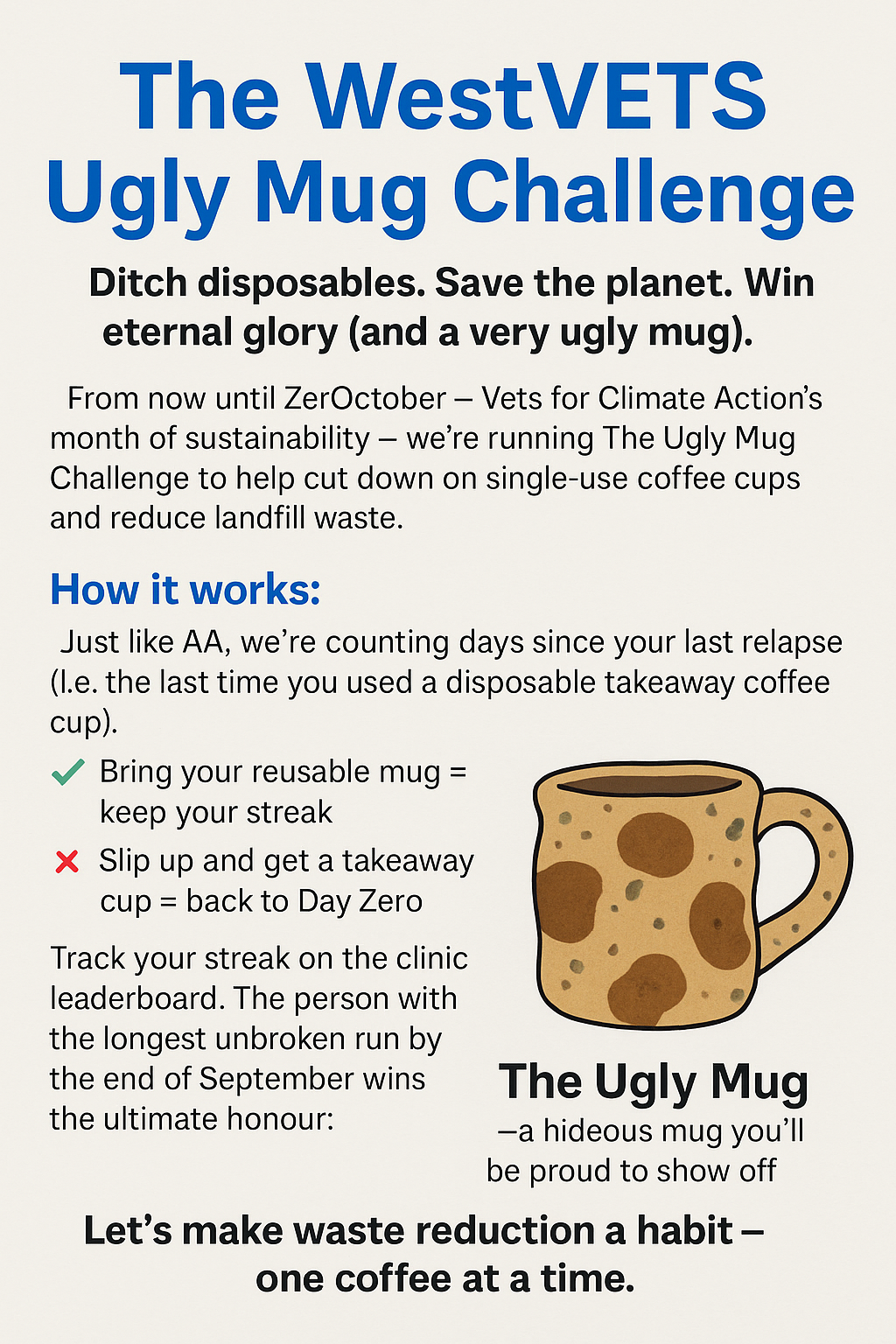
Want to go bigger? Set up a team challenge!
Track consecutive days team members go without using single-use (takeaway) coffee cups. Keep the streak going and celebrate milestones!
Click on the image to check out WestVETS’s Ugly Mug Challenge!
3. Recycle Smart: Host 10c Container Collections (and raise funds for your favourite charity, like Vets for Climate Action  )
)

Why: Recycling plastic bottles can reduce landfill, energy, and prevent the contamination of our land and oceans, protecting our wildlife and environment. Plus, recycling one plastic bottle would save enough energy to power a 60-watt light bulb for 3 hour. For every tonne of plastic recycled, 16.3 barrels of oil and 5,774 kWh energy is saved (that’s enough energy to charge a Tesla battery more than 100x).
Want to go bigger? Supercharge your recycling with BRAD by Banish! BRAD helps divert hard-to-recycle office and household items from landfill and responsibly recycle them. It addresses the challenge of problematic waste - things like blister packs, pens and markers, plastic bottle top lids, beauty products, single use cutlery/cups/soy sauce fishies and so much more!
4. Voice Your Values: Tell your regular suppliers that environmental responsibility matters to your practice. And source suppliers actively taking sustainable steps, like BOVA Aus.

How: Request consolidated deliveries, reusable and and reduced packaging options, and ask about their recycling programs.
Want to go bigger? Before scheduling any suppliers for a Lunch and Learn, ask them to share their sustainability journey and steps they're taking to address climate change. Use our email template to help!
5. Remember the 6 R's of Waste Reduction

The 6 R's provide a powerful framework for sustainable veterinary practice: Rethink your purchasing decisions - do you really need that item? Refuse unnecessary single-use products and freebies that create waste. Reduce the quantity of materials you use wherever possible. Reuse items for new purposes rather than discarding them. Repair broken equipment and supplies instead of immediately replacing them. Recycle as a final option when items can no longer serve other purposes.
A couple of tips shared with us include:
Rethink:
- Whenever possible, reduce plastic packaging by buying in bulk
- Order consolidation is a simple yet effective strategy for improving sustainability
Reuse:
- Clean used IV lines & syringes can be repurposed for euthanasia procedures
Small changes, big impact
Every plastic-free choice you make in your practice protects the animals we serve while taking meaningful climate action. Start with just one tip from this email - whether it's bringing your own coffee cup or setting up a container collection for charity.
Remember, as veterinary professionals, we're uniquely positioned to lead change in our communities. When we demonstrate that environmental responsibility and excellent animal care go hand in hand, we inspire others to follow.